Legionella Compliance Software: What to Look for When Choosing a Platform
Managing legionella compliance on paper is not just inefficient. It is a liability. When a critical flushing task gets missed because a reminder never fired, or an auditor asks for a temperature log from three months ago and no one can find it, the consequences run from enforcement notices to prosecution. The question for most facility managers, water hygiene consultants, and estates teams is no longer whether to move to a digital platform. It is which one to choose.
This guide gives you a framework for making that decision. Not a list of products, but the criteria that genuinely matter for legionella compliance and why each one maps to a specific legal or operational obligation. We also compare the main platforms on the market so you can see how they stack up side by side.
Why paper logbooks and spreadsheets fail legionella compliance
Paper logbooks and spreadsheets are the default for most organisations that have not yet digitalised their water safety management. They work until they do not. The specific failure modes are predictable:
- No automatic reminders mean tasks get missed when staff are on leave or workloads spike.
- Paper records cannot be searched, cross-referenced, or shared with an auditor in real time.
- Data across multiple sites lives in multiple files with no consolidated view of compliance status.
- There is no audit trail showing who completed a task, when, and with what result.
- Non-compliances cannot trigger automatic escalation to the responsible person.
The L8 Approved Code of Practice requires that records are kept and maintained. HSG274 requires that records are available for inspection. Neither standard specifies that records must be digital, but when a paper system cannot demonstrate who did what and when, it fails the intent of both.
.webp)
What legionella compliance software actually does
Before evaluating specific platforms, it helps to understand the job they are designed to do. Legionella compliance software centralises the full cycle of water safety management: risk assessment, task scheduling, monitoring, non-compliance escalation, and reporting. It replaces disconnected spreadsheets and paper logbooks with a single system that connects the people responsible for a building's water safety with the work that needs to happen and the evidence that it did.
Done well, a compliance platform maps directly to the obligations set out in L8 ACoP, HSG274, and COSHH. Done poorly, it adds administrative overhead without improving oversight.
The 7 features that matter when evaluating legionella software
Questions to ask any legionella software vendor
Before committing to a platform, these five questions will reveal more than any feature list:
- Is your risk assessment output compliant with L8 ACoP and HSG274 and still up-to-date? If your risk assessment is not reviewed regularly, you might want to check this first.
- How does your platform handle a task that is completed outside the scheduled window? The answer tells you whether the system enforces compliance discipline or simply records activity.
- Can I see an example of the audit report a duty holder would export for an HSE inspection? Ask for a real example, not a simple "yes, we could".
- What happens when a temperature reading falls outside the acceptable range at 11pm on a Sunday? Escalation should be immediate and automatic, not dependent on someone checking a dashboard the next morning.
- How does onboarding work for an organisation with 50 existing buildings and paper records? Data migration and implementation support are where many platforms underdeliver against expectations.
.webp)
Cloud-native vs legacy desktop: what the difference means for compliance
Legionella compliance software compared: the main platforms
There is no single right answer when choosing legionella compliance software. The right fit depends on the scale of your estate, the mix of compliance domains you manage, whether you are a service provider or a duty holder, and how much of the stack you need in one place. The platforms below represent the main options in the UK market.
.webp)
LegionellaDossier
LegionellaDossier is a purpose-built, end-to-end water safety and legionella compliance platform. It covers the full workflow: mobile risk assessment with automatic L8 and HSG274-compliant report generation, task scheduling, temperature monitoring via Bluetooth thermometer and IoT sensors, non-compliance escalation, multi-site dashboards, and role-based access for consultants, duty holders, and site operatives. The risk assessment template has been audited through LCA-accredited partner deployments. IoT integration covers Factorylab sensors and compatible third-party hardware.
The focus is exclusively on water safety and legionella. Organisations that also need fire, asbestos, or other compliance domains in the same system will need a separate platform for those areas.
Best for: water hygiene consultants and service providers managing multiple client sites, NHS Trusts and healthcare estates.
ZetaSafe
ZetaSafe (part of Micad) is one of the most established multi-domain compliance platforms in the UK, in use at over 1,000 organisations. Its core strength is breadth: a single platform manages water hygiene and legionella (L8 ACoP, HSG274, HTM 04-01), fire safety, asbestos, emergency lighting, gas and electrical safety, HVAC, and lab QA. Compliance domains can be managed independently or together.
The trade-off is depth. ZetaSafe is not a legionella-specialist platform. Set-up requires configuration work. Pricing is negotiated for enterprise deployments.
Best for: Organisations that need legionella alongside fire, asbestos, and other domains.
Velappity
Velappity is a generic inspection platform used across legionella, fire, asbestos, HVAC, and general health and safety. Its architecture is form-builder first. There are no built-in L8 or HSG274 task schedules and no legionella-specific temperature thresholds. It has a strong billing module and client portal, making it suited to inspection companies managing multiple compliance domains and client relationships.
Best for: inspection companies managing multiple compliance domains who want one platform for work, reporting, and invoicing. Less suitable as a dedicated legionella platform for duty holders.
L8 Log
L8 Log is a legionella-only IoT monitoring platform built around its own proprietary hardware. The proposition is continuous, automated temperature monitoring with real-time alerts. Pricing is flat with no per-user fees. It does not support full mobile risk assessment or multi-domain compliance.
Best for: operators wanting continuous IoT monitoring.
L8MS
L8MS is a UK legionella specialist with 20+ years of water hygiene experience. Modular: L8MS Risk for standardised risk assessment reports (credit-based); L8MS BRS for record-keeping with a 52-week planner view; mobile app for on-site data collection. No IoT integration, no compliance domains outside legionella.
Best for: Excel table-based risk assessment production.
Vision Pro
Vision Pro is a modular compliance suite covering legionella, fire, asbestos, gas, electrical testing, building condition surveys, and audit management. NFC and RFID support. Strong in UK education and public sector estates.
Best for: estates teams managing fire and asbestos.
.webp)
How LegionellaDossier approaches each criterion
LegionellaDossier is built as an end-to-end water safety platform. Risk assessments are conducted via the mobile app, with the L8 and HSG274-compliant report generated automatically on completion. The template has been audited by LCA-accredited partners across multiple customer deployments.
Task scheduling is fully automated, with configurable recurring schedules and multi-channel reminders. When a task is overdue or a temperature reading falls outside range, the non-compliance dashboard flags it immediately and can escalate to the responsible person automatically. The multi-site dashboard gives consultants and duty holders a portfolio-wide compliance view in real time.
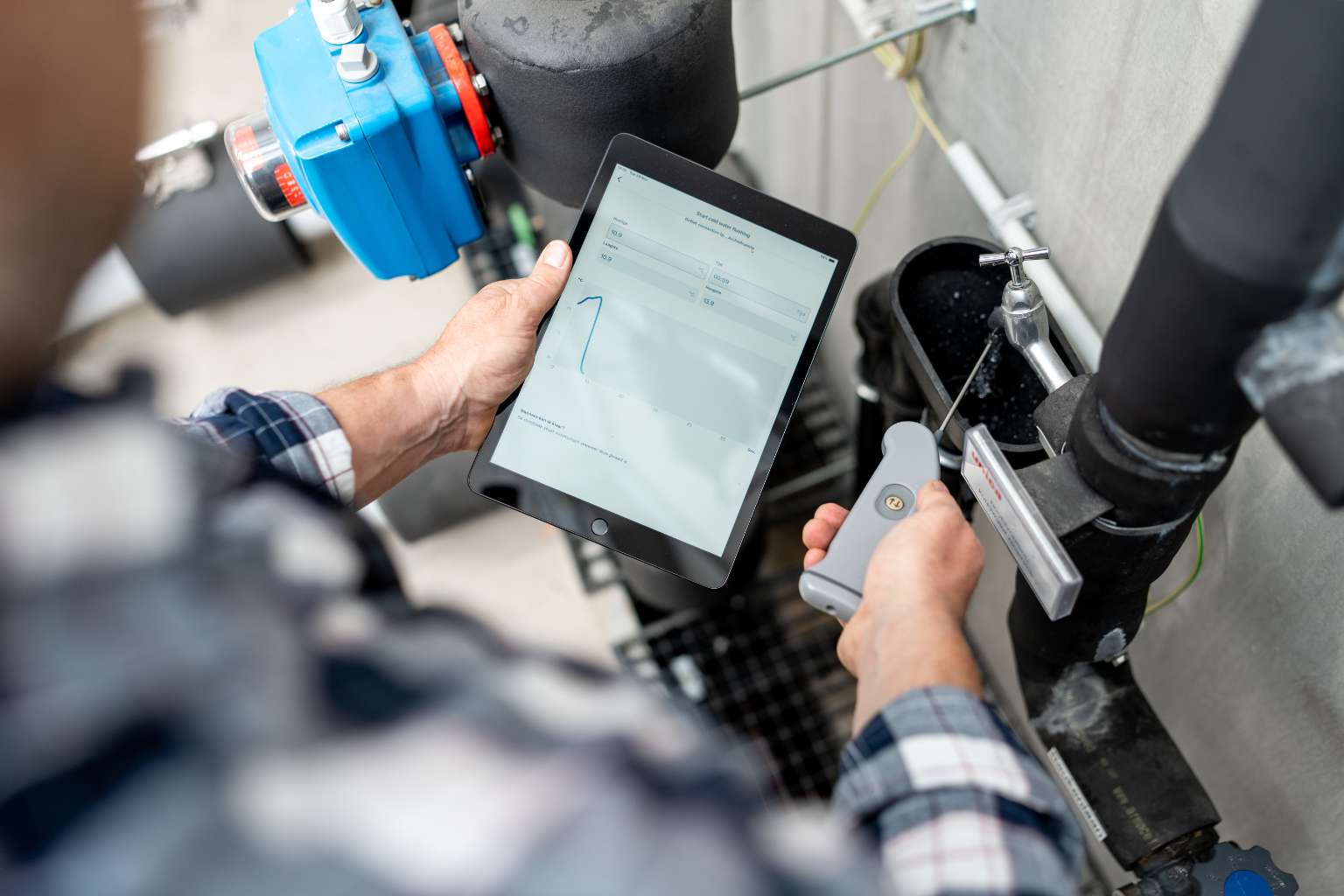
Hardware integration covers IoT temperature sensors (including Factorylab and compatible devices) and Bluetooth thermometers that sync directly to the mobile app. Every data point is timestamped and attributed to the user who recorded it, creating an unbroken audit trail from monitoring to remediation.
Role-based access covers the full stakeholder map: water hygiene consultant, duty holder, site operative, and read-only client view. All of this runs on a cloud-native architecture accessible from any device.
Frequently asked questions
What is legionella compliance software?
Legionella compliance software is a digital platform that centralises the management of water safety obligations under L8 ACoP, HSG274, and COSHH. It replaces paper logbooks and spreadsheets with automated task scheduling, real-time monitoring, non-compliance escalation, and audit-ready reporting.
Is legionella software a legal requirement?
The law requires that legionella risks are assessed, controlled, and recorded. It does not specify the format. However, a software platform significantly strengthens the demonstrable evidence of compliance that HSE and CQC inspectors look for, and it reduces the operational risk of missed tasks or lost records that paper systems carry.
How much does legionella compliance software cost?
Pricing varies significantly by the number of sites, users, and features required. Most platforms offer per-site or per-user subscription models. The relevant comparison is not software cost vs no software cost, but software cost vs the cost of an enforcement notice, a prosecution, or a Legionnaires' disease outbreak.
Can I replace my paper logbook with software?
Yes. A digital platform creates a more complete and more defensible record than a paper logbook because every entry is timestamped, attributed to a named user, and cannot be altered without a trace. For any organisation managing multiple sites or multiple contractors, the shift from paper to digital is the single highest-impact change you can make to your legionella control programme.
What is the difference between legionella software and a water hygiene platform?
The terms are often used interchangeably. Some products described as legionella software focus specifically on logbook replacement and data collection. A water hygiene platform typically covers the full compliance cycle: risk assessment, scheme of control, task management, monitoring, non-compliance management, and reporting. When evaluating options, check whether the platform covers the end-to-end workflow or only part of it.
.webp)
.webp)