UK Atomic Energy Authority got Legionella compliance under full control
.webp)
The UK Atomic Energy Authority (UKAEA) site at Culham is home to MAST (Mega Amp Spherical Tokamak), UKAEA's fusion reactor, alongside various projects to develop fusion as a new source of clean energy for generations to come. The site was also home to JET, the world's most advanced nuclear fusion reactor, until operations stopped in December 2023; JET is now in a decommissioning process.
UKAEA's mission is to lead the delivery of sustainable fusion energy to maximise scientific and UK economic benefit. The site spans 3 to 4 square kilometres, houses around 60 building areas, and at peak capacity has 2,500 people working across it daily.
Legionella compliance sat at the centre of a tangled contractor chain. The FM contractor carries out the day-to-day flushing and temperature monitoring directly, and separately holds a contract with a water hygiene contractor who carries out risk assessment reviews, sampling, and chlorinations.
With UKAEA's two-person water systems team sitting at the top of that chain, getting a complete, real-time picture of compliance across all parties was nearly impossible. Temperature readings were logged on paper sheets stored in folders at the contractor's site office. If something was missed or out of spec, UKAEA might not find out for weeks or longer.
The challenge
Before adopting LegionellaDossier, UKAEA faced four compounding problems.
First, there was no real-time visibility: paper logbooks held at the contractor's office meant weeks could pass before an issue was spotted.
Second, the site's sheer complexity, dozens of linked buildings sharing water supplies, made separate risk assessments difficult to manage.
Third, UKAEA had no direct control over the water hygiene work; all decisions had to go through the FM contractor.
And fourth, reduced post-COVID occupancy left showers, kitchen facilities and low-use outlets at elevated Legionella risk, requiring proactive flush management.
"If they miss a task and it's four or five weeks later, you can't go back and redo it." - David Gear, Water Systems Group Leader, UKAEA
Why LegionellaDossier
When UKAEA started evaluating digital options, the FM contractor was already exploring electronic logbook systems and getting nowhere. David Gear took a different approach and found LegionellaDossier. After a demonstration, the decision was straightforward.
Critically, UKAEA made the decision to hold the LegionellaDossier contract directly, not through the FM contractor. Because LegionellaDossier is held directly by UKAEA, the compliance data and workflows will remain completely intact, even if they were to switch their FM contractor.
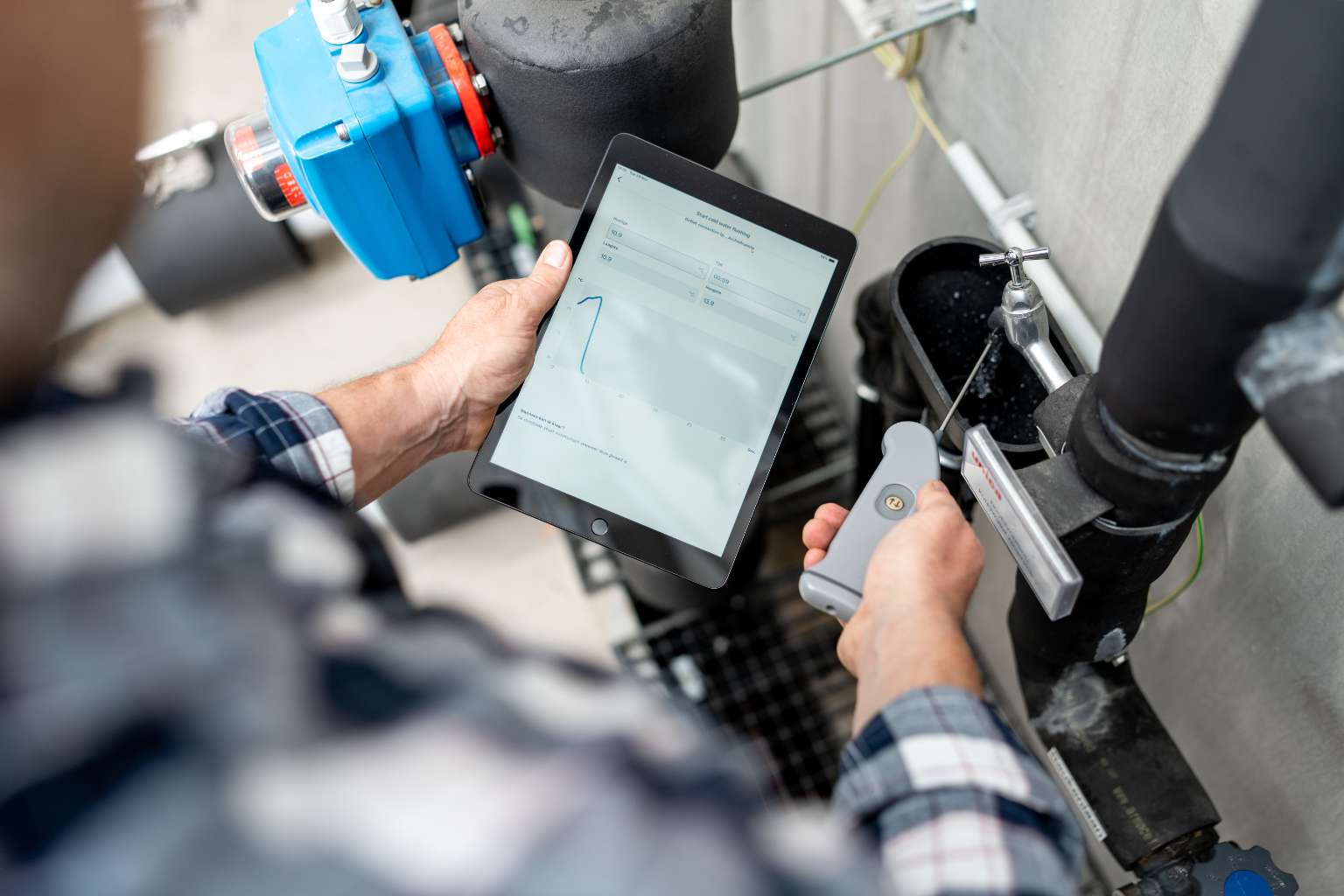
The platform was rolled out to technicians using tablets and Bluetooth thermometers already on site, previously sitting unused. Technicians now record all flushing and temperature data directly in the app, with data syncing automatically as they move around the site.
"If the FM contract changes hands, our compliance program won't be blown out the window. Keeping the system under our direct control ensures stable data and compliance despite contractor turnover." - David Gear, Water Systems Group Leader, UKAEA
One system. Multiple parties. Full oversight.
One of the less obvious but significant advantages of holding LegionellaDossier directly is what it enables across the contractor chain. UKAEA's CMMS directs the water hygiene work to the FM contractor, while LegionellaDossier works alongside this system, recording the results: the FM contractor's flushing and temperature checks, the water hygiene contractor's risk assessment reviews and sampling, the authorising engineer's compliance reviews, and UKAEA's own water systems team overseeing all of it.
The risk assessment sits at the centre of this. Rather than existing as a separate PDF document disconnected from day-to-day operations, the risk assessment in LegionellaDossier feeds directly into the control scheme. Assets identified in the risk assessment become the tasks that technicians work from in the field. Non-compliances flagged during monitoring can be traced straight back to the relevant part of the risk assessment, and remedial actions are tracked through to completion. Nothing falls through the gap between the paper assessment and the operational logbook because there is no gap.
For UKAEA, this means that despite having multiple external parties involved in their water hygiene programme, they always have a single, complete picture. Any non-compliance that arises, whether a temperature out of spec, a missed flush, or an overdue remedial action, is visible to UKAEA immediately, regardless of which contractor was responsible. The authorising engineer can review live data during annual audits rather than working through folders of paper records. And if a contractor changes, the data, the risk assessments and the full compliance history stay exactly where they are.
The results
The shift from paper logs to LegionellaDossier changed how UKAEA manages water hygiene at a fundamental level. Rather than reacting to issues discovered weeks later, the team can now identify non-compliance within minutes of a task being completed or missed.
"We wouldn't want to be without it. We've invested the time and resources, we've got people that are familiar with it. It's our compliance program and we're really pleased." - David Gear, Water Systems Group Leader, UKAEA
Remote monitoring: seeing problems before they become incidents
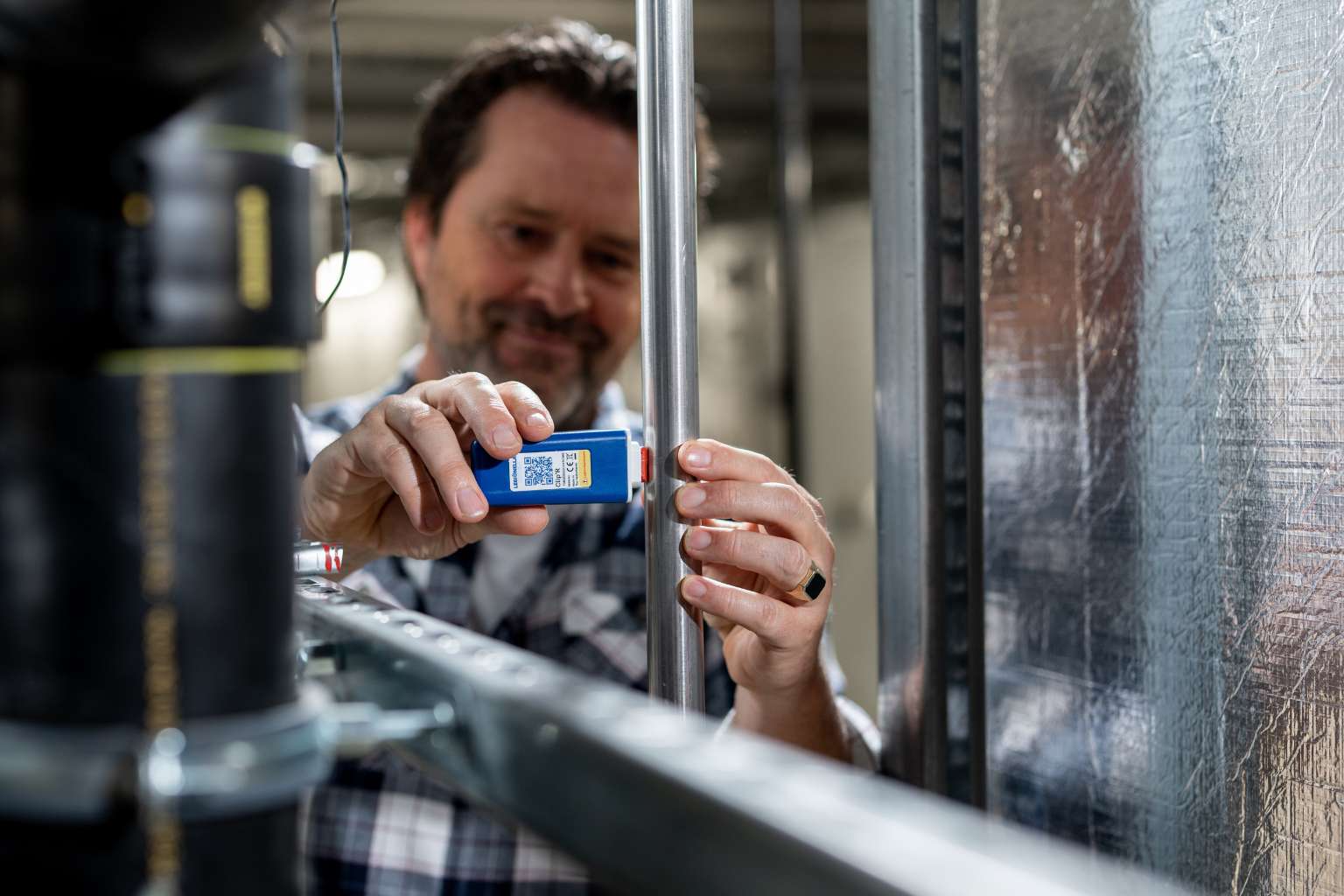
Beyond the day-to-day flushing and temperature checks, UKAEA has been rolling out remote temperature sensors across the site, integrated directly into LegionellaDossier. The integration came about after a third-party sensor system was installed in a new building by the FM contractor, but the data was locked in the supplier's own portal and firewalled from UKAEA's network. Working with the LegionellaDossier tech team, the sensors were integrated so all readings now appear directly inside the platform alongside every other compliance task.
Sensors are deployed strategically rather than on every outlet, monitoring the mains supply coming into a building, and the flow and return temperatures on hot water systems. This approach quickly surfaces systemic issues: if the main cold supply is showing at 11 degrees but an outlet further down the system is reading 24 or 25 degrees, the sensor trend immediately points to uninsulated pipework running near a heat source or crossing a warm roof space.
Post-COVID occupancy changes have made this visibility especially valuable. Buildings that once housed hundreds of people daily now sit at much lower footfall, leaving showers, kitchen facilities and welfare areas going unused for days at a time. The sensor data helps identify exactly where stagnation risk is building up, so the flushing schedule can be targeted and evidenced rather than assumed.
UKAEA has also trialled sensors on assets to understand real usage patterns, and the data confirmed what the team suspected: usage across the site is far more uneven than the building occupancy numbers alone would suggest. The plan is to expand sensor coverage further across the site, focusing on main supply lines rather than individual outlets, to get the best coverage without creating unmanageable volumes of data.